

New jobs in animal welfare
Are you interested in careers related to animal welfare? Do you want to start or change careers so that your work improves the place and health of animals in our society? Here are several ideas for jobs working with pets, their training programs, and the regulations that govern them.
Do you dream of turning your passion for animals into a real profession? You are not alone! In 2025, there were more than 70 million pets in France , or one in two households.
This special relationship with our dogs, cats, and other pets has given rise to new professions, often unknown to the general public. These professions allow individuals to fully pursue their passion independently , while adapting their schedule to their personal life.
But beware: behind this enthusiasm lies a market reality: customers are not always there and there are real regulations to respect.
Between state-recognized training and related certifications , it becomes crucial to know who to turn to in order to truly make a living from your passion, while accumulating enough knowledge and experience necessary for the animal profession of your choice.
Let's go, I'm taking you behind the scenes of these animal welfare jobs that are attracting and growing.
Summary
Training programs for animal-related professions: recognized and unrecognized
Before founding EmmèneTonChien, I obviously asked myself the question: what animal-related job would I like to do? It was clear to me that I wanted to work with animals. And I must say that I was completely overwhelmed by the sheer number of training programs available …
State-recognized diploma, Qualiopi certification, university, private organization, in person, remotely… Not to mention the price of the training, which can amount to several thousand euros!
When you want to work with animals , you often have a job idea in mind, but the question of training to access it remains central.

Let's take stock of the training programs that exist for working in animal welfare , whether you're looking to become a behaviorist, pet sitter, animal-assisted therapy practitioner, groomer, breeder…:
This is the mandatory “training” required to work in any profession involving pets. Focused on either dogs, cats, exotic pets, or several at once, it lasts a minimum of 14 hours and is spread over 2 or 3 days, before being assessed by a multiple-choice questionnaire.
Let's be honest, it's nowhere near enough to acquire the necessary knowledge. It's the only legally required qualification, without which you're not allowed to practice, but it absolutely must be supplemented by serious, job-specific training in the field that interests you!
The ACACED must be reassessed every 10 years. Many private training schools offer the training as well as knowledge updates (7 hours).
These are basic, general, but comprehensive training programs that allow you to learn the profession in its entirety. They must lead to an RNCP certification, validating a list of skills with the state. Generally including a mandatory (and essential!) internship, they can sometimes also be completed through an apprenticeship.
You will often see this certification highlighted on school websites. It is not specific to animal-related professions, but it attests to the quality of the training organization itself.
In practical terms, if a school displays the Qualiopi logo, it means that its teaching methods have been audited and validated by the state. Be careful not to confuse things: this doesn't mean that the diploma awarded is state-recognized, but only that their teaching methods are validated! Which is already a very good thing.
The advantage for you is that this comes with easier financing options (CPF, pooled funds, employer…).
This is where things can get chaotic. There are a multitude of independent schools and online training organizations in the animal sector. And the quality of the teaching varies enormously!
It's best to embark on these training courses after completing a solid, state-recognized foundational education. Often shorter, they can then prove useful for deepening your knowledge, gaining experience, or learning from an expert in a specific field. Some examples of specializations include: reactive dogs, deaf dogs, unweaned kittens, multi-animal management, and communication with pet owners.
Make sure you thoroughly check the legitimacy of the organization you choose. Animal welfare isn't always one of their priorities. Don't hesitate to ask for a sample lesson, the names of the instructors to verify their qualifications, or even to look for student reviews online.
Now that you know all the types of training that teach animal welfare professions, do you know which profession would suit you best?
Canine behaviorist: a booming profession

It's a profession I admire immensely. A canine behaviorist seeks to understand both the dog's living environment and its personality, in order to prevent or resolve problematic behaviors : excessive barking, separation anxiety , uncontrollable excitement, aggression…
This profession also exists for cats, rabbits, birds…
Animal welfare is a key issue , as it's central to the mission of a behaviorist. However, some training organizations still teach traditional, sometimes violent, rehabilitation methods. I recommend verifying that instructors teach scientifically validated approaches that respect the dog.
What's the difference with a dog trainer? Personally, I see the profession of behaviorist a bit like that of a psychologist, and that of a dog trainer like that of a teacher. They are complementary professions, but the former seeks to teach or relearn life skills (sociability, resilience, self-confidence… yes, dogs also need to have confidence in themselves!), while the latter teaches skills that are useful in a human world (recall, obedience…).
🎓 Several state-recognized courses allow you to become an animal behaviorist: the Master's Certificate, the Professional Certificate, and the Professional Bachelor's Degree. Some include the ACACED certification, but for others, you will need to complete the training separately.
The vast majority of animal behaviorists are self-employed . They primarily work with households with pets, but also in shelters and associations. They may also partner with veterinarians or municipalities to expand their reach. Demand is particularly high in large cities , where pet owners are willing to spend money on their animals' well-being.
Professional pet sitter: more than just pet sitting
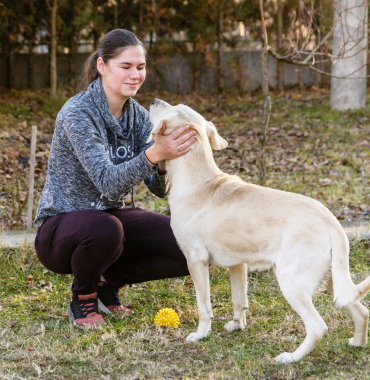
A professional pet sitter has a real influence on the well-being of the animals they care for. Indeed, they are the ones who ensure that their needs are met in the owner's absence : walks, feeding, playtime or cuddles, care, and sleep.
He provides services either at home for a limited time, or in his own facility: boarding or daycare for dogs, cats, and other pets.
Apart from ACACED, there is unfortunately no state-recognized training yet for the pet-sitting profession.
However, managing several animals at the same time, or animals you don't live with, is far from easy. The first time I tried to take a friend's German Shepherd out without her, he was so excited he bit my forearms for 10 minutes… I left the apartment with bleeding arms, shaking all over, without even having been able to put him on a leash! So, pet sitting is a real profession, and it's something you learn.
To practice this profession, which requires skills in animal behavior, training as an animal behaviorist can be beneficial . This will allow you to adapt to the animals you will be managing on a daily basis.
Animal-assisted therapy and zootherapy: very different professions
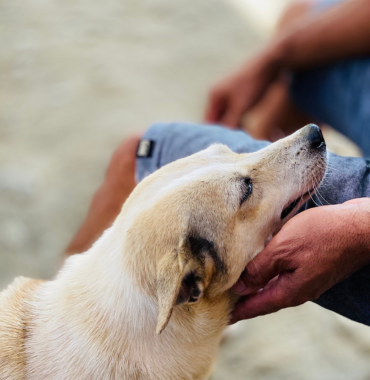
Animal-assisted therapy practitioners and zootherapists use animals as a tool for social connection with their patients, with the aim of improving their well-being.
These approaches are aimed at a variety of audiences : elderly people, children with difficulties, patients in hospital settings…
I have already seen animal-assisted therapy with rabbits, guinea pigs, dogs, cats or even horses… This is also somewhat the function of educational farms.
Regarding animal-assisted therapy , as its name suggests, it aims at therapeutic objectives : improving mobility, stimulating memory, regulating anxiety… It is therefore practiced by healthcare professionals, such as psychologists, occupational therapists or nurses, within the framework of a care protocol.
🐰 In this exercise, be careful not to see your animal solely as a tool. Of course, it's useful and even necessary. However, a patient's well-being should never come at the expense of an animal's suffering . Not all individuals are suited to animal-assisted therapy, and even the gentlest need to be treated with care. If this profession appeals to you, your animal's opinion is just as important as your own—listen to it!
I hope I've shed some light on the new careers in the pet industry. Take the time to choose a training program that will thoroughly prepare you for all facets of these professions: animal welfare, behavior, business management, communication with clients and patients…
Do you have a project? I'm interested, feel free to share it with us in the comments!
As for me, I finally chose to help animals in a different way by creating EmmeneTonChien.com: I help them go on vacation with their owners! Vacations are also about well-being for our furry friends!
Comments
No comments yet. Have a question or experience to share? Start the discussion!